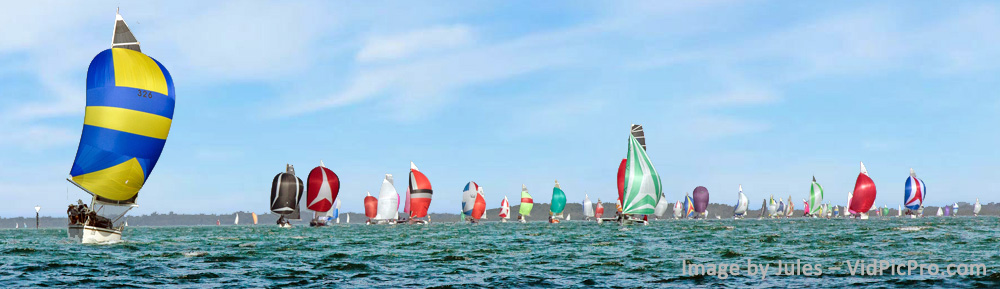
Hervey Bay Boat Club Bay to Bay Yacht Race
2026 Sponsors






Hervey Bay Boat Club Bay to Bay Yacht Race
Queensland’s largest trailable yacht race and one of Australia’s premier trailer-sailer passage races.
The Hervey Bay Boat Club Bay to Bay Trailable Yacht Race is conducted annually by the Hervey Bay Sailing Club over the Queensland Labour Day long weekend. Sailed across two days, the race takes competitors on a spectacular passage from Tin Can Bay to Hervey Bay through some of the most beautiful and challenging coastal waters in Queensland.
Open to eligible monohull and multihull trailable yachts, the Bay to Bay has earned a reputation as a true highlight of the sailing calendar, combining competitive racing, tactical navigation, tidal strategy and an unforgettable natural setting.
Race Overview
- Event: Hervey Bay Boat Club Bay to Bay Trailable Yacht Race
- Organised by: Hervey Bay Sailing Club
- When: Queensland Labour Day long weekend
- 2026 Dates: Saturday 1 May and Sunday 2 May 2027
- Format: Two-day, two-leg passage race
- Race Category: Category 5
- Eligible Boats: Monohull and multihull trailable yachts
- Start: North of Snapper Creek, Tin Can Inlet
- Overnight Stop: Garry’s Anchorage
- Finish: East of the Urangan Boat Harbour, Hervey Bay
The Race
The Bay to Bay is a two-day passage race through the waters of the Tin Can Bay Inlet, Wide Bay Harbour, the Great Sandy Strait and Hervey Bay. It is a race that rewards preparation, sound decision-making and good seamanship, while also delivering one of the most scenic sailing experiences in the country.
The course takes the fleet from north of Snapper Creek at Tin Can Bay through tidal channels, open stretches of water and the sheltered reaches of the Great Sandy Strait before finishing in Hervey Bay. Competitors break the passage with an overnight stop at Garry’s Anchorage, located between K’gari (Fraser Island) and Stewart Island.
For many crews, that combination of challenge, adventure and camaraderie is what makes the Bay to Bay such a special event. It is not simply a start-and-finish race — it is a full sailing weekend shared with a large fleet in a truly remarkable part of Queensland.
Through a Spectacular Marine Environment
One of the defining features of the Bay to Bay is the setting. The race passes through the internationally significant waters of the Great Sandy Marine Park and alongside the natural beauty of the Great Sandy National Park and World Heritage listed K’gari.
The Great Sandy Strait is one of the most unique waterways in Australia, known for its tidal channels, protected waters and rich marine habitat. The area supports abundant wildlife and offers competitors the rare experience of racing through a largely unspoilt coastal environment that is as memorable as it is challenging.
This setting gives the Bay to Bay a character all of its own — part competitive race, part coastal passage, and part celebration of trailer-sailer sailing in one of the best natural venues in the country.
Race Format and Challenge
The Bay to Bay is sailed over two legs across two days. The first day takes the fleet from Tin Can Bay north through the course to the overnight stop at Garry’s Anchorage. On the second day, competitors continue north before crossing into Hervey Bay and finishing off Urangan.
Success in the Bay to Bay is about more than straight-line speed. Crews must deal with tides, currents, navigation, changing wind strengths and varied water conditions. In some years strong winds have tested boats and crews to their limits. In others, lighter winds have placed even greater emphasis on tactics and patience.
That mix of variables is a big part of the race’s appeal. No two Bay to Bay races are ever quite the same, and every crew comes away with a different story.
History of the Bay to Bay
The Bay to Bay Yacht Race was conceived by members of the Hervey Bay Sailing Club on 18 April 1980. It was first proposed as a one-day race from Tin Can Bay to Hervey Bay, but the length of the course soon made it clear that the event would work better as a two-day race with an overnight stop at Garry’s Anchorage.
Although early expectations were modest, the inaugural race in 1981 attracted more than 114 boats, immediately confirming the event’s potential. In the years that followed, the race grew strongly as word spread through the sailing community.
Fleet sizes climbed to a record of 230 trailable yachts, and while numbers vary from year to year, the Bay to Bay has remained one of the best-supported events of its kind in Australia. Today it continues to attract strong fleets and loyal returning competitors, with many sailors regarding it as an annual must-do event.
Why Sail the Bay to Bay?
The Bay to Bay offers something few races can match — a genuine passage race for trailer-sailer crews through a remarkable coastal wilderness, backed by decades of history and a strong reputation within the sailing community.
Competitors are drawn by the challenge of the course, the beauty of the Great Sandy Strait, the social atmosphere of the overnight stop, and the chance to race as part of one of the largest trailer-sailer fleets in the country.
For first-time entrants, it is an event that quickly earns a place on the calendar. For returning crews, it is a tradition. Year after year, the Bay to Bay continues to deliver the kind of race experience that keeps sailors coming back.
History
The Bay to Bay race was originally conceived by members of the Hervey Bay Sailing Club on 18 April 1980. Originally suggested as a one-day Trailable Yacht race from Tin Can Bay to Hervey Bay, the course length of approximately 87 km saw it modified to a two-day event, with an overnight stop at Garry's Anchorage part way up the Great Sandy Strait. Although it was originally thought that no more than 30 people would participate in the race, over 114 vessels arrived to compete in the inaugural event in 1981.
Following the success of the first event, word spread through the sailing community with entries climbing to a high of 230 and dropping slowly to a now stable approximately 140 boats. Conditions have varied from year to year, with heavy winds (causing equipment failure and retirements), to light winds (resulting in a shortening of the course).
Eligibility and Entry
Trailable Yacht eligibility includes Type 1 Standard, Type 1-A Sports Like and Type 2 Sports Monohull Boats and Type 3 Standard and Type 4 Sports Multihull Boats.
All boats shall be:
- Strongly built, watertight, capable of withstanding solid water, properly rigged, fully seaworthy and meeting the standards of the Yachting Association Special Regulations and the requirements of Queensland Transport Marine Safety Queensland, Queensland Boating and Fisheries Patrol and Queensland Water Police
- Crewed by a minimum of two persons one of whom is aged at least 18 years and capable of accepting the responsibilities of the owner and all of whom are fit to face the conditions of the race
- Greater than 4.8m in length
- All monohull boats shall be transported on the road without special permit and on the same trailer used to launch and retrieve it without the assistance of external equipment or detachment from the towing vehicle
- All monohulls shall be ballasted boats designed and built to resist capsize
- Rigged and sailed according to the boats details declared on the entry form
All boats must comply with the requirements of all relevant government authorities including Queensland Transport Operations Marine Safety Regulations for smooth and partially smooth waters and Queensland Transport Marine Pollution Regulations for the Great Sandy Strait (discharge of raw sewage is not permitted in the Great Sandy Strait) and Queensland Parks and Wild Life requirements.
The race is through a largely sparsely populated and remote area and there are no facilities for toileting, waste disposal, sleeping, refreshments, food, fuel, ships chandlery or boat repair at Garry's Anchorage on the Saturday night and competitors are expected provide all of the above provisions and to carry sufficient food, water and fuel to cater for extreme weather conditions.